
Blueprint and TravConsult highlight coffee as a “role model” product in the rise of F&B in travel retail
According to the consultancies, coffee “shines bright due to its versatility, high-margin and experience-driven attributes”
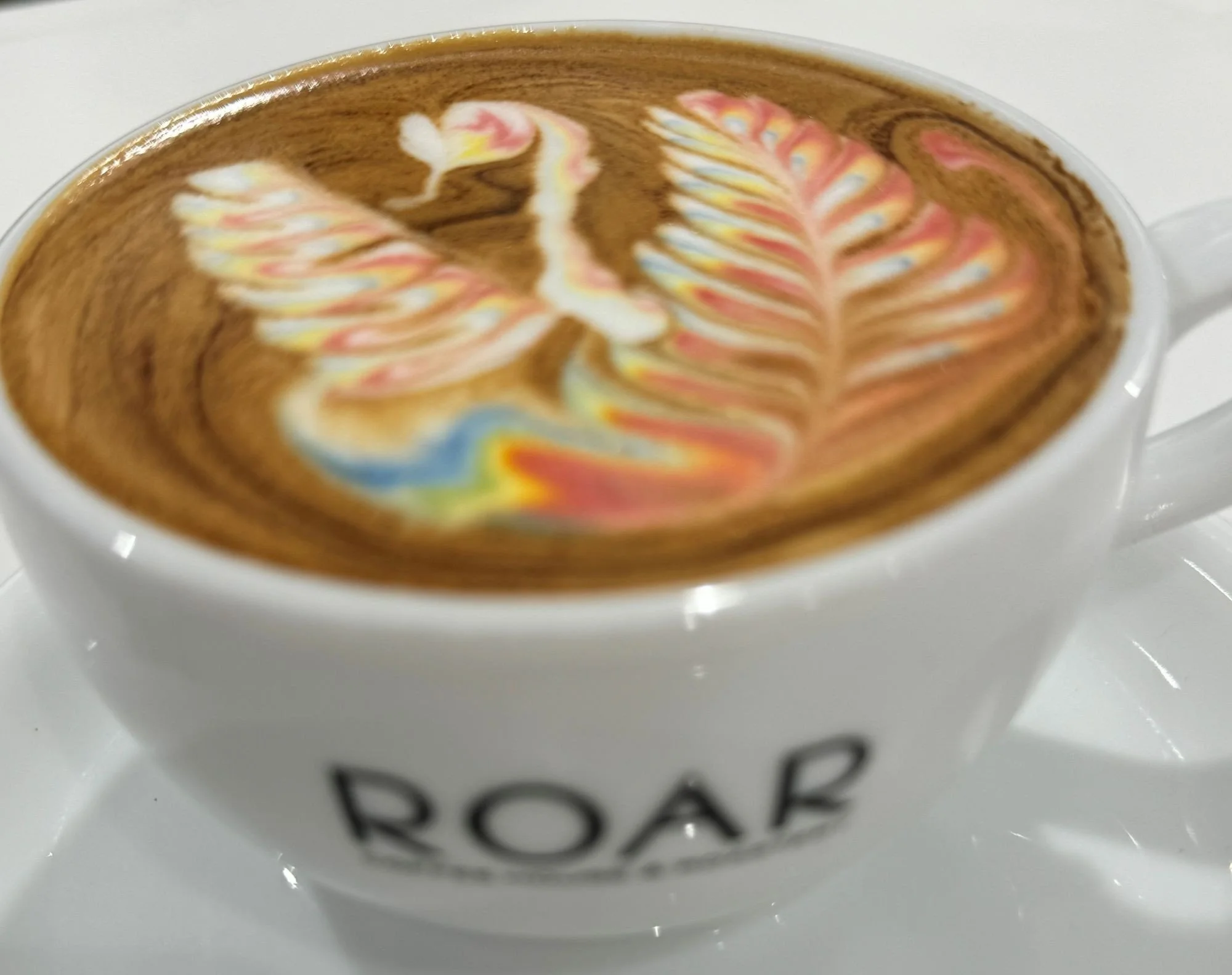
A ‘rainbow colored’ latté from ROAR in Tokyo is highlighted as a memorable coffee experience.
Travel retail consultancy Blueprint, in collaboration with TravConsult, has released a new study into the rise of food and beverage in travel retail, highlighting the role of coffee in solving what it considers an industry challenge.
“Coffee is a multi-dimensional experience platform with transformative powers: it comes in different sizes, tastings, price levels and benefits from global recognition and cultural heritage. It excels at emotional context,” says Blueprint Partner Thomas Kaneko Henningsen.
“We can learn so much from the same bean that offers affordable brew for the many and high-priced emotional experience for the few – it is fascinating!”
Today, coffee has become a role model product that shines bright due to its versatility, high-margin and experience-driven attributes.
The State of Coffee
Coffee began as an agricultural commodity originating in Ethiopia before spreading across the Arabian Peninsula, Europe, Asia and eventually the world. The first coffee house opened in Venice in 1640 and for centuries, it was simply consumed as a beverage.
According to Forbes, coffee has become one of the most traded commodities and it is estimated that 2.25 billion cups of coffee are consumed daily worldwide. By 2030, the global coffee market is projected to reach $369.46 billion, expanding at a compound annual growth rate (CAGR) of 5.3% from 2025 to 2030.
According to Blueprint, the rise of experiential cafés across Copenhagen, Tokyo, New York and vibrant cities throughout the world is not fundamentally a coffee story. “It is a story about passionate consumers increasingly valuing belonging, authenticity and meaningful experiences over traditional consumption.
“Coffee has evolved beyond a product, it has become a culinary platform; it successfully appeals to virtually every demographic, nationality and income group.
Blueprint notes how consumers willingly purchase €1 convenience coffee, €5 specialty coffee, €15 rare-origin coffee and €50 curated tasting experiences. “Add extra attributes like image prints, sense of place merchandise along with specialized milk products and brewing equipment to hyper-personalize tasting experiences.”
Most of the extraordinary value comes from storytelling, ritual, craftsmanship, experience and emotional connection. And perhaps that’s why coffee offers one of the clearest and simplest windows into the future of consumer behavior in travel retail.
"Coffee may be a global product, but the meanings people attach to it are deeply cultural," says Trevor Lee, Co-founder & Managing Director of TravConsult. "Throughout our work across Asia, we increasingly see cafés becoming places where people build relationships, work, study, create social media content and simply spend time together. Coffee is often the catalyst rather than the destination”.
The Rise of Airports as The Third Place
Coffee is the F&B opportunity that continues to accelerate on a global scale, and it has the potential to help turn future terminals into the world's largest collection of third places.
Industry forecasts done by Blueprint in association with ACI and published last year conclude that F&B will remain among the fastest-growing commercial categories within European airports towards 2030. On a global scale, the concession F&B market is set for steady growth between 2024 and 2031, going from US$33.7 billion to almost $50 billion, according to a 2024 report from Verified Market Research. That is a CAGR of +5.3%. The concessions include stadiums and event venues, offices and universities, airports and travel hubs, and city and leisure sites. The CAGR is close to Blueprint’s own study (+5.1%).
Blueprint notes that coffee shops have always been places where people build communities, work remotely, relax, learn and discover new ideas. “Now daytime coffee rave parties offer a space to socialize with like-minded individuals, listening to the music they enjoy without alcohol as the main focus.”
Following the move of iconic brands such as Ralph Lauren, Coach, Emporio Armani and Louis Vuitton, more fashion players are tapping into coffee and F&B in general. These culinary experiences give consumers a new opportunity to interact with brands.
"One of the biggest behavioral differences we observe across Asia is not what people drink, but when and why they gather around coffee," comments Lilly Choi-Lee, Executive General Manager at TravConsult.
"In Australia, cafés are busiest during the morning commute and the first half of the day. Across much of Asia, they often come alive in the evening and even after midnight. During recent visits to Chongqing, Seoul and Ho Chi Minh City, we found cafés still full late into the night with students studying, friends chatting, couples meeting and live music creating an atmosphere that encouraged people to stay”.